
 Feefo 5.0* 1000+ reviews
 UK wide delivery on all products
 Products can be fully calibrated & certified
 Service & repairs at competitive prices
 Find a better price and we will try and beat it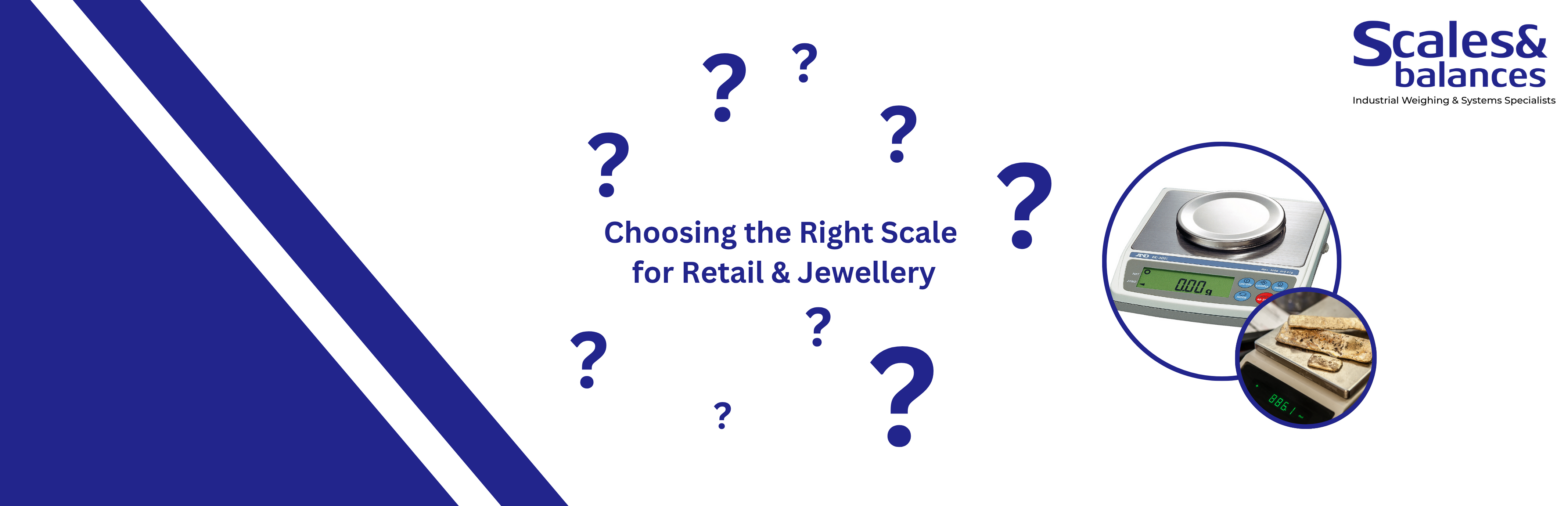
Choosing the Right Scale for Retail & Jewellery
Making and selling jewellery can be a lucrative business, but to succeed, you need a firm grasp on weight measurement. Precious metals and stones are bought and sold by weight, meaning mistakes and inaccuracies can be costly. Not only might you be out of pocket, but you might damage trust with your customers.
In this introductory guide, the Scales & Balances team will explore retail jewellery scales and balances, look at their features and provide tips and guidance for their use.
- What Are Jewellery Scales And Why Do They Matter?
- Features Of Retail Jewellery Scales To Look Out For
- Trade Approved Retail & Jewellery Scales
- Tips & Guidance For Using Jewellery Scales
- Purchasing Retail Jewellery Scales
What Are Jewellery Scales And Why Do They Matter?
Jewellery scales are precision weighing instruments explicitly designed to weigh both finished items and components, such as gold, silver, and gemstones. Jewellery balances offer extremely fine readability, often measuring to 0.01g or even 0.001g depending on the application.
Accuracy matters for jewellery scales because weight is always closely tied to market value. When dealing with precious metals or stones, even tiny differences in mass can affect pricing. Reliable scales help ensure fair transactions, accurate stock management and consistent product valuation. For jewellers, pawnbrokers and precious metal dealers, and gemstone traders, weighing equipment is central to maintaining professional standards.
Jewellery scales are used in a variety of settings, from high-street retail counters and workshops to auction houses and diamond trader offices. Bench-top balances are common, while compact retail models are often placed front of house to support transparent customer transactions.
By investing in a scale designed specifically for jewellery applications, businesses can achieve a level of precision that might give them the edge in a competitive marketplace. At the very least, they’ll be trusted by customers and business partners alike.
Features Of Retail Jewellery Scales To Look Out For
Alongside precision, usability, durability and presentation all play important roles in the jewellery business, particularly in retail environments where equipment is visible to customers.
High readability and stability are essential features. Look for scales with fast stabilisation times so that readings appear quickly. Draft shields or protective covers can also improve weighing processes by reducing the impact of environmental factors, which can affect sensitive measurements.
A clear digital display is another important consideration. Backlit screens make readings easy to see in varying lighting conditions, while dual displays let both staff and customers see the weight simultaneously. Some models include counting or percentage weighing functions, which can be useful for stocktaking or manufacturing tasks.
Build quality matters too. Stainless steel weighing pans, sealed keypads and robust housings help ensure that scales remain reliable despite regular use. For retail counters, compact designs with a professional finish can enhance the customer experience while keeping workspaces tidy.
Trade Approved Retail & Jewellery Scales
In the UK, jewellery scales used for buying and selling by weight must be Trade Approved. This means the equipment meets strict legal metrology requirements that protect customers. Approval shows that the scale has been independently tested for accuracy. Using non-approved equipment for retail transactions may undermine customer confidence. For jewellers, pawnbrokers and precious metal dealers, compliance is not just a legal requirement; it is a sign of credibility.
Tips & Guidance For Using Jewellery Scales
Getting the most from jewellery scales requires more than simply placing items on the weighing pan. Correct setup and handling can significantly improve accuracy and extend the lifespan of your equipment. This starts by positioning the scale on a stable, vibration-free surface away from drafts, air conditioning vents or open windows. Even slight environmental changes can affect readings when working with high-precision balances. Allow the scale to warm up according to the manufacturer’s instructions, and always check that it is level before use.
Handling the jewellery to be weighed carefully is also important. Tweezers or gloves prevent contamination from oils or dust. Using taring containers or trays keeps the operation simple.
Regular cleaning and maintenance help preserve performance over time. Keeping the weighing pan free from residue and ensuring calibration checks are carried out as recommended will help maintain reliable results day after day.
Purchasing Retail Jewellery Scales
When purchasing jewellery scales, it is useful to consider different use cases. Retail counters are likely to require Trade Approved models with customer-facing displays, while workshop environments might benefit from higher-precision analytical balances. Capacity, readability and compliance should all be reviewed alongside the practical needs of your workspace.
It’s also worth thinking about future growth. Investing in a scale that supports additional features such as connectivity or advanced weighing modes can provide flexibility as your business evolves. Reliable suppliers can offer advice on selecting the right model, as well as guidance and ongoing support.
Choosing the right jewellery scale is an investment in both accuracy and reputation. With the correct equipment in place, retail jewellers can ensure fair transactions, maintain compliance and deliver a professional experience that builds confidence with every customer interaction.