
 Feefo 5.0* 1000+ reviews
 UK wide delivery on all products
 Products can be fully calibrated & certified
 Service & repairs at competitive prices
 Find a better price and we will try and beat it
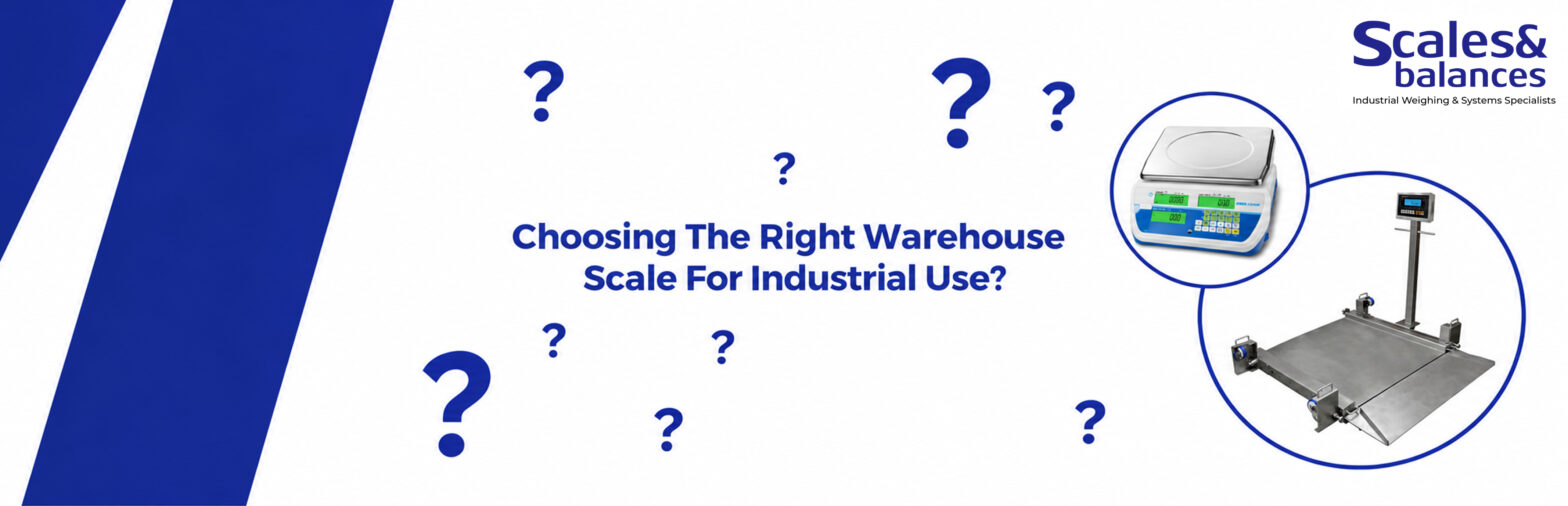
Choosing The Right Warehouse Scale For Industrial Use?
If you have a little understanding of industrial goods and materials handling, it’s easy to recognise the value of warehouse scales. They can, almost entirely on their own, make the difference between ineffective systems that do not work smoothly and professional, efficient operations that do. Traceable and accurate data from warehouse scales is often the foundation of success.
In this introductory guide, we’ll consider the range of warehouse scales available, describe their features, and provide tips for correct use, care and maintenance.
- What Is An Industrial Warehouse Scale?
- What Types Of Warehouse Scales Are Available?
- Warehouse Scale Features To Look Out For
- Tips For Warehouse Scale Use And Upkeep
- Purchasing Industrial Warehouse Scales
What Is An Industrial Warehouse Scale?
An industrial warehouse scale is a weighing system designed to weigh goods in fast-paced storage and distribution environments. Unlike smaller laboratory or retail scales, warehouse scales are built for high-capacity use, often involving large and bulky loads.
Today, you’ll see industrial warehouse weighing systems at key points in most modern supply chains. Accurate weight data helps ensure effective shipment and storage of palletised goods, raw materials, bulk containers, and more. Many modern warehouse scales are integrated with barcode scanners, labelling software, and warehouse management software supporting automated, digitised processes.
Despite featuring high-spec electronic technology, industrial warehouse scales are typically constructed with heavy use in mind. Reinforced platforms and robust load cells prioritise durability. In busy environments where speed and reliability are essential, the correct scale is central to day-to-day operations.
What Types Of Warehouse Scales Are Available?
Warehouse environments vary considerably, and each brings a distinct set of weighing challenges. As a result, the types of scales used within warehouses vary a great deal, too. Platform scales are among the most common options. They offer flat surfaces that allow operators to weigh boxes, containers or smaller pallets with ease. These scales are often located at packing stations or goods-in areas where frequent weighing occurs.
Floor scales either sit flush with the warehouse floor or are slightly raised and accessible via a ramp. They can accommodate pallet trucks or forklifts, making them ideal for high-volume logistics operations.
Pallet scales are similar to floor scales, but designed specifically to weight loaded pallets. Pallet truck scales can weigh on the move. These mobile units allow operators to weigh palleted goods as they lift and move them around a warehouse.
Counting scales are another valuable option, especially in environments dealing with large quantities of small components. Calculating piece counts based on weight helps improve inventory accuracy and reduce manual counting errors.
Selecting the right type of warehouse scale often depends on workflow, load size and how frequently items need to be weighed.
Warehouse Scale Features To Look Out For
Choosing the right warehouse scale involves more than selecting the correct capacity. Durability should be a primary consideration, as industrial environments can be demanding. Look for reinforced steel platforms, sealed load cells and protective housings designed to withstand dust, vibration and heavy use.
Accuracy and stability are equally important. High-quality warehouse scales provide consistent readings even when weighing large or uneven loads. Features such as anti-slip surfaces and integrated ramps can improve safety while simplifying loading procedures.
Connectivity is increasingly becoming a key feature in modern warehouse operations. Scales that integrate with digital systems allow weight data to be transferred automatically to various systems, including stock management, shipment tracking and even label printing.
User-friendly interfaces can also make a noticeable difference. Clear digital displays, programmable functions and simple controls help staff work efficiently without extensive training.
Tips For Warehouse Scale Use And Upkeep
Proper use and regular maintenance are essential for ensuring warehouse scales continue to deliver accurate results. One of the most important steps is positioning the scale on a level surface. Uneven flooring or unstable placement can lead to inconsistent readings. Routine cleaning is also vital. Dust, packaging debris or liquid spills can accumulate around the weighing platforms. Keeping scales clean helps protect sensitive components and avoids inaccurate results.
Calibration should be carried out periodically according to manufacturer guidelines. Regular calibration ensures that weight readings remain accurate and supports compliance with internal quality control processes. Keeping maintenance records can also be valuable during audits or inspections.
Operator training is another key factor. Staff should understand how to position loads correctly, avoid overloading and wait for readings to stabilise before recording results. Simple habits like these help extend the lifespan of the equipment while improving overall accuracy.
Purchasing Industrial Warehouse Scales
When purchasing warehouse scales, it’s important to start with a clear understanding of your operational requirements. Consider the types of goods you handle, the maximum weight you expect to measure and how frequently the scale will be used.
Once you have an idea of your requirements, it is worth asking an experienced supplier for advice. They can recommend suitable models and may also offer installation support, calibration services and ongoing maintenance packages.
A well-chosen industrial warehouse scale can improve productivity, reduce errors and support better decision-making across your entire logistics operation. By investing in the right equipment and maintaining it correctly, businesses can build a more accurate, streamlined and professional warehouse environment.