 Feefo 5.0* 1000+ reviews
 UK wide delivery on all products
 Products can be fully calibrated & certified
 Service & repairs at competitive prices
 Find a better price and we will try and beat it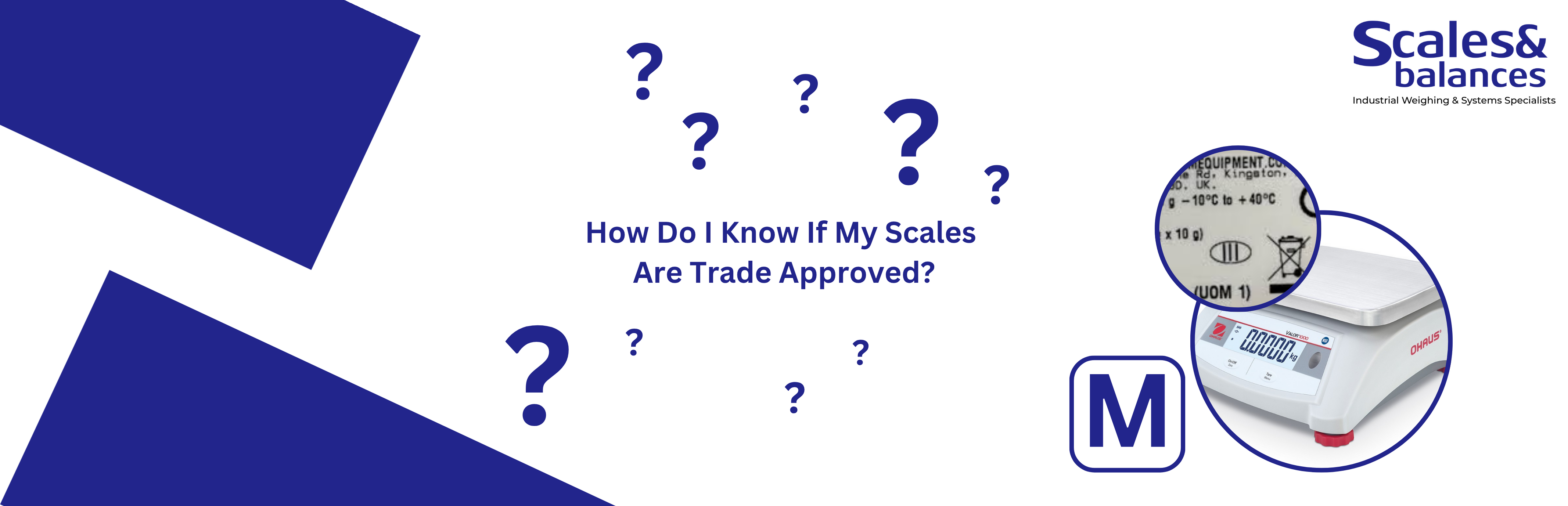
How Do I Know If My Scales Are Trade Approved?
There are simple ways to check for Trade Approval, as scales certified for selling goods by weight will be marked with an “M” alongside the last two digits of the year of manufacture. CE or UKCA marks also show compliance with European or UK legislation. There may also be a four-digit notified body number, a class designation, and tamper-proof seals.
Trade Approval isn’t just a nice thing to have; it’s a legal requirement for anyone who trades with customers based on weight. Our guide will be helpful across a range of industry sectors from food and drink sales to jewellery making, and beyond.
- What Does Trade Approved Mean Under UK Weights And Measures Law?
- When Do Scales Need To Be Trade Approved?
- How To Identify Trade Approved Scales
- What Do Trading Standards Officers Check?
- Common Compliance Mistakes To Avoid
- Purchasing Trade Approved Scales With Confidence
What Does Trade Approved Mean Under UK Weights And Measures Law?
Trade Approved scales are often described as “legal for trade” equipment. They are weighing instruments certified for use in commercial transactions where weight data determines price. If you sell items, raw materials, food or similar products by the gram or kilogram, you will need to use Trade Approved scales and balances in your operation. In the UK, this certification complies with the legal metrology requirements set out in the Measuring Instruments Directive (MID) and is enforced by Trading Standards.
To achieve trade approval, a scale must undergo conformity assessment by an authorised body. This process ensures that the equipment meets defined standards for accuracy, stability and durability. Approved devices are designed so calibration settings cannot be altered without breaking official seals, helping protect consumers from incorrect pricing.
If your business charges customers based on weight, using non-approved scales could place you in breach of regulations, leading to potentially costly penalties and a tarnished reputation.
When Do Scales Need To Be Trade Approved?
Not every weighing instrument requires trade approval. The key question is whether the weight data from your scale is used directly in a financial transaction. This applies to supermarkets, independent retailers, food counters, farm shops, market traders, and more. If your customers need to trust your scales before parting with their hard-earned cash, they need to be trade-approved.
However, internal-focused scales that a business might use for quality checking or batching need not be approved, because they determine how much a customer pays.
If there is any doubt, it’s safer to seek professional advice about your scales before using them commercially.
How To Identify Trade Approved Scales
Legal-for-trade instruments carry visual indicators confirming they have passed conformity assessment and meet regulatory requirements. Typical markings include a black or green M sticker and CE or UKCA markings, although there are other types. It pays to do some research. It is worth noting, that if these markings are missing or damaged, the scale may no longer be legally suitable for trade use.
What Do Trading Standards Officers Check?
Across the UK, local Trading Standards officers enforce our weights and measures regulations. Inspections may be routine or prompted by complaints, but they are also designed to ensure fair trading practices, prevent fraud and protect consumers interests.
During an inspection, officers may check approval markings, examine seals and perform test weighings to verify accuracy. They will also look at how the scale is positioned and used, for example, checking customers can clearly see the weight reading and pricing information.
Businesses that maintain compliant equipment and keep records of calibration or servicing usually find inspections straightforward. Problems tend to arise when non-approved scales are used for pricing, when seals have been broken or when equipment has not been appropriately maintained.
Taking a proactive approach to compliance can significantly improve how smoothly inspections proceed.
Common Compliance Mistakes To Avoid
One of the most common misunderstandings is to assume that any modern digital scale is automatically Trade Approved. This is an assumption that could prove costly. Another frequent issue involves servicing or recalibration carried out by unqualified technicians. This can negate Trade Approved status and, again, prove costly. You should always use experienced service providers familiar with legal metrology requirements.
Retail scales should also be positioned so customers can easily see the weight reading where required. Poor setup may raise concerns even if the equipment itself is compliant.
Purchasing Trade Approved Scales With Confidence
If you are unsure whether your current equipment is compliant or if you are planning to upgrade your weighing systems, working with an experienced supplier can help you make informed decisions. A specialist vendor can explain certification markings, recommend suitable Trade Approved models and ensure your scales meet UK weights and measures regulations from the start.
Choosing the right equipment is about more than just ticking a box. The correct Trade Approved scale will keep your customers happy. It is important for every business to be trusted and seen as fair and transparent. Professional guidance can help make sure any investment in Trade Approved weighing equipment supports that goal.