
 Feefo 5.0* 1000+ reviews
 UK wide delivery on all products
 Products can be fully calibrated & certified
 Service & repairs at competitive prices
 Find a better price and we will try and beat it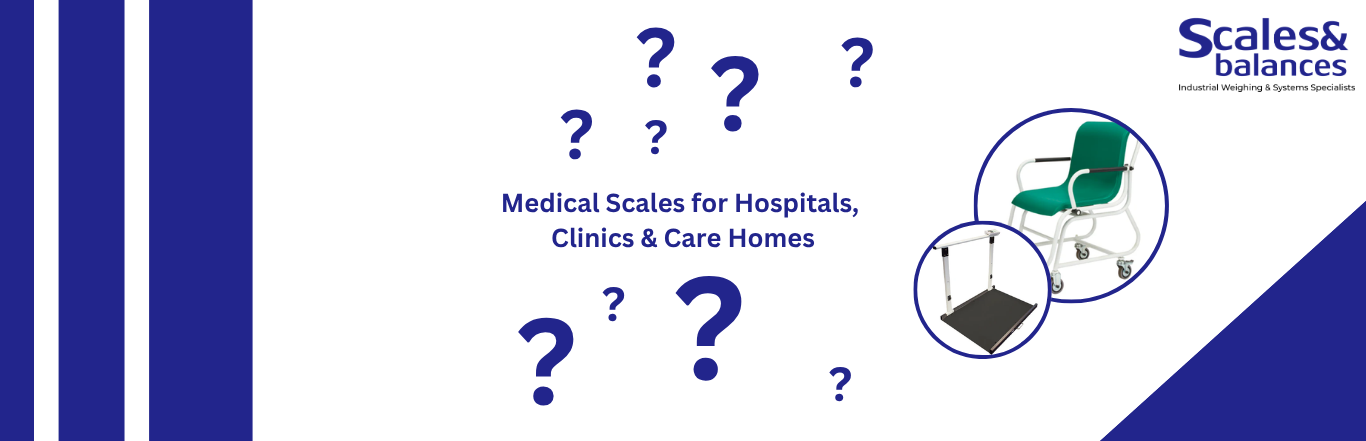
Medical Scales for Hospitals, Clinics & Care Homes
Weighing hospital patients, clinic users, and care home residents requires specialist equipment. Medical scales are carefully designed and engineered to provide weight data that doctors, clinicians and carers can trust. Reliable weight data is vital for those making diagnostic and treatment decisions, as inaccuracy can have devastating consequences.
In this introductory guide, our team will explore medical scales available on the market, describe their features and provide top tips and advice on their use.
- What Are Medical Scales?
- What Certification Do Medical Scales Require in the UK?
- Medical Scale Features To Look Out For
- Using Medical Scales In Hospitals, Clinics & Care Homes
- Purchasing Medical Scales
What Are Medical Scales?
The term “medical scales” is typically reserved for professional weighing equipment used in healthcare settings. They differ from standard, commercially available scales that you might use to weigh yourself at home, for example. They are built to a higher standard of reliability, and to prioritise patient comfort and safety. Hospitals, GP surgeries, outpatient clinics and residential care environments all rely on medical scales to monitor patient health, track treatment outcomes, and support safe medication dosing.
Medical scales come in a range of formats to suit different patient needs. Column and flat medical scales are often used when patients can stand for routine checks. Chair scales and wheelchair scales are also available, which allow individuals with limited mobility to be weighed comfortably. Baby and neonatal scales are also seen in maternity wards. Beyond simply recording weight, modern medical scales often include BMI calculation, integration of height measurement, and digital connectivity features. This allows healthcare professionals to record data quickly and maintain accurate patient records.
What Certification Do Medical Scales Require in the UK?
Medical scales used for clinical decisions in the UK must be certified as outlined in the Non-Automatic Weighing Instruments (NAWI) directive. This states that only medical scales that have been tested for accuracy and reliability against the NAWI standard can be used for tasks related to patient care. Medical scales that pass the test are typically referred to as “Class III approved”. Using equipment that isn’t Class III approved for patient care can have serious consequences for hospitals, clinics and carehomes, including penalties and censure.
Choosing compliant equipment is about more than ticking a box. Certification provides reassurance that your chosen medical scale will deliver consistent results over time and support clinicians who rely on accurate readings for patient monitoring, nutritional planning, medication dose calculations, and more.
Medical Scale Features To Look Out For
When selecting medical scales, functionality and usability are just as important as accuracy. Healthcare environments can be busy and fast-paced, so equipment needs to be intuitive, durable and adaptable to a range of patient needs.
One key feature to consider is accessibility. Low-profile platforms, handrails and wide weighing surfaces make it easier for patients with mobility challenges to use the equipment safely. Display clarity is another important factor. Large, easy-to-read screens allow clinicians to capture readings quickly, even in low-light or high-traffic environments. Some medical scales also offer hold functions, allowing weight readings to remain visible after a patient steps off the platform, which can be particularly useful in busy wards.
Connectivity features are becoming increasingly popular. USB, Bluetooth or wireless integration enables scales to link directly with electronic health record systems, reducing manual data entry and the potential for transcription errors. Battery-powered options may also be useful where portability is required, allowing equipment to move easily between treatment rooms.
Using Medical Scales In Hospitals, Clinics & Care Homes
It is important to always use a medical scale in line with its specification and manufacturer’s guidelines. Failure to do so puts patient safety and well-being at risk. As a minimum, healthcare staff should be trained to position equipment on a stable, level surface, undertake any recommended setup checks, and confirm that scales are zeroed before use.
Hygiene is also a key consideration. Medical scales should be cleaned between uses. Equipment designed for healthcare environments is often made from stainless steel and sealed to make this straightforward.
Patient dignity and comfort should always remain at the centre of the weighing process. Providing clear guidance, allowing time for positioning and using accessible equipment can help create a calm and supportive experience, particularly for vulnerable individuals.
Purchasing Medical Scales
When purchasing medical scales, it’s important to look beyond price alone. Capacity, accuracy class, patient accessibility and compliance with UK certification standards should all form part of the decision-making process. Healthcare providers should consider how often the equipment will be used, the range of patients it needs to support and whether portability or fixed installation is more appropriate.
It is worth asking a supplier with appropriate medical scales knowledge and experience for advice. Vendors with a proven track record can offer guidance on choosing the right scales. Investing in high-quality medical scales is an investment in patient care. With the right equipment in place, hospitals, clinics and care homes can capture reliable weight data, support informed clinical decisions and create a safer, more efficient healthcare environment for everyone involved.