 Feefo 5.0* 1000+ reviews
 UK wide delivery on all products
 Products can be fully calibrated & certified
 Service & repairs at competitive prices
 Find a better price and we will try and beat it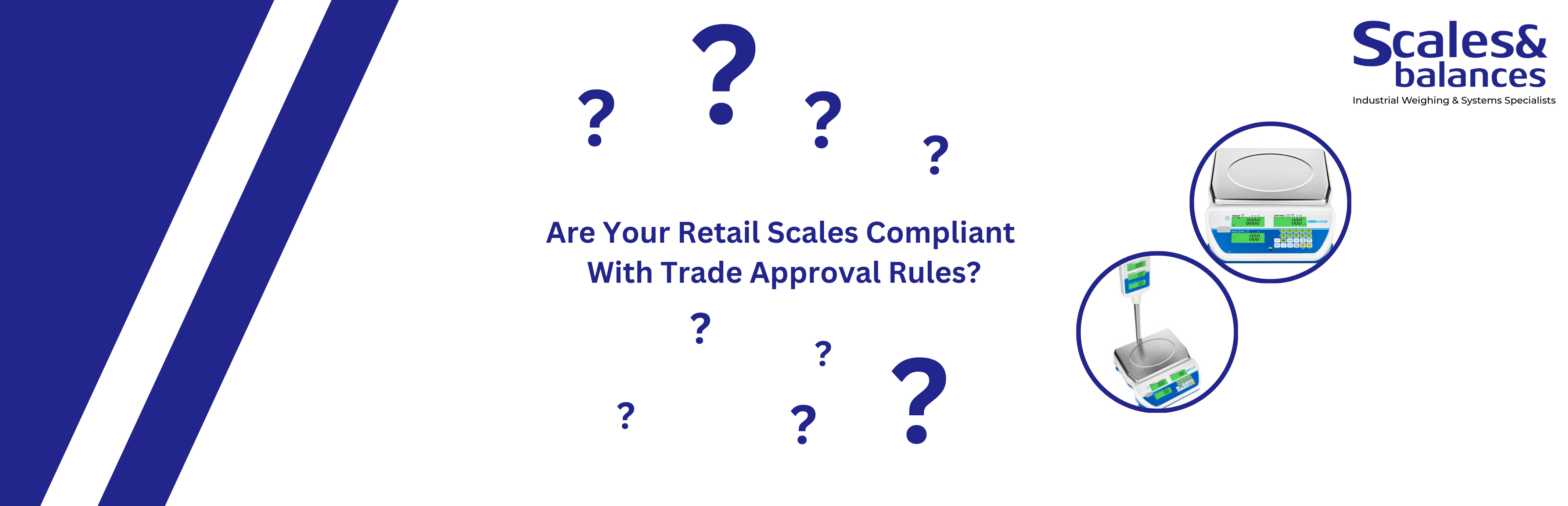
Are Your Retail Scales Compliant With Trade Approval Rules?
Retail scales are the cornerstone of many and varied commercial transactions. For countless shopowners, traders, and market stall holders, however, accuracy is not simply a matter of operational efficiency; it is a legal requirement. Retailers must ensure that any scales used to determine prices are approved.
The scheme through which this happens is known as Trade Approval. In this introductory guide, we explore what trade approval means, when it applies, how certification works and what retailers need to know.
- What Does Trade Approval Mean For Retail Scales?
- Do All Retails Scales Need To Be Trade Approved?
- Trade Approval Markings & Certification
- Selling Goods By Weight & The Law
- Inspection By Trading Standard Officers
- Purchasing Trade Approved Retail Scales
What Does Trade Approval Mean For Retail Scales?
Trade approval is a formal certification process that confirms scales used in retail meet the requirements for fair and legal commercial transactions. Understanding whether your retail scales meet trade approval rules is essential for avoiding potentially costly enforcement action, not to mention unhappy customers and a tarnished business reputation.
A trade approved retail scale has been independently tested to verify its accuracy, repeatability and resistance to tampering. This protects consumers from both accidental pricing errors and deliberate fraud. For retailers, trade approval is a legal safeguard. Using non-approved equipment where trade approval is required can expose a business to enforcement action from the UK Trading Standards authority.
Do All Retail Scales Need To Be Trade Approved?
Not every weighing device used in a retail environment must be trade approved. The determining factor is whether the scale is used to calculate the price of goods sold by weight. It could be cheese or compost, if scale results directly influence what a customer pays, trade approval is required. In retail, this applies to all commercial transactions, direct sales and the calculation of tolls, tariffs, taxes and remuneration. You’ll see trade approved scales hard at work every day supporting everyone from independent deli owners to precious metal and gemstone dealers.
Scales used internally for stock management and packaging typically do not require approval, provided they are not used directly for customer-facing transactions.
Many retail businesses operate multiple types of weighing equipment simultaneously. Understanding the distinction between internal-use scales and trade-approved retail scales is key to staying within the law.
Trade Approval Markings & Certification
Trade Approved scales can be identified by a series of specific markings that confirm they meet strict accuracy standards. These vary, but the clearest of them all is a green or black square sticker featuring a capital M representing metrology alongside the last two digits of the year of manufacture. Older equipment may still carry a crown stamp or lead plug applied by a weights and measures inspector.
Retailers should regularly check that certification markings remain intact and visible. Maintaining clear documentation related to maintenance and servicing can also help demonstrate compliance if you are ever inspected.
Selling Goods By Weight & The Law
UK weights and measures legislation requires that any measuring instrument used in a financial transaction is accurate, appropriate, and adequately maintained. This applies to a wide range of retail sectors, including food, speciality goods and market trading.
Retailers must ensure that customers can clearly see weight readings when appropriate and that pricing structures are transparent. Failure to comply with trade approval rules may result in warnings, product seizures or financial penalties. While enforcement bodies often take an educational approach, retailers selling goods by weight are expected to understand and uphold their legal responsibilities.
Inspection By Trading Standards Officers
UK Trading Standards officers are responsible for monitoring compliance with weights and measures regulations. Inspections may be scheduled or unannounced and typically involve checking that retail scales are correctly certified, accurate and suitable for their intended use.
During an inspection, trading standards officers will typically ask to review approval markings and records before performing tests to confirm accuracy. They may also assess how the scale is positioned and used within the retail environment, ensuring that customers are not misled.
Preparing for inspections involves maintaining equipment in good working order, keeping certification records accessible and ensuring staff understand how to use trade approved scales correctly.
Purchasing Trade Approved Retail Scales
Purchasing trade approved retail scales shouldn’t be overly complex. Once you’ve established the capacity and accuracy you require, you need to consider factors such as durability and functionality. Do you need waterproof or weatherproof scales? Do you need heavy-duty equipment? Do you have room for your scales on a counter or workbench, or do you need floor or platform scales? The list goes on. If you’re not sure where to start, why not ask a specialist weighing equipment supplier for advice? They can simplify the process by recommending models that meet trade approval requirements, and make sure scales are supplied ready for legal use.
Selecting the right certified trade approved retail scales from the outset allows retailers to focus on serving their customers fairly and transparently.