
 Feefo 5.0* 1000+ reviews
 UK wide delivery on all products
 Products can be fully calibrated & certified
 Service & repairs at competitive prices
 Find a better price and we will try and beat it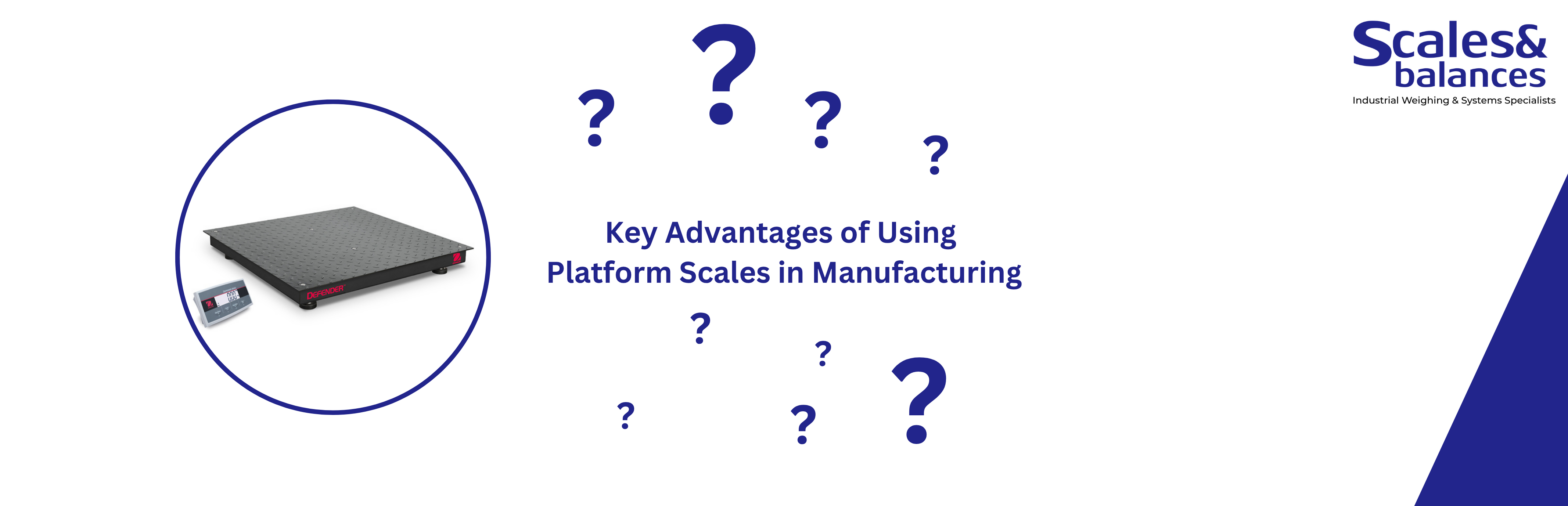
Key Advantages of Using Platform Scales in Manufacturing
Quality, efficiency and safety sit at the heart of modern manufacturing workplaces. Whether you are weighing raw materials, monitoring production output or preparing goods for shipping, reliable weighing equipment plays a critical role in all three. Platform scales are among the most versatile and widely used weighing solutions across the manufacturing sector.
In this introductory guide, we explore what platform scales are, the advantages they offer manufacturers, what features to prioritise, and how to choose the right model for your operations.
- What Is A Platform Scale?
- Advantages Of Platform Scales In Manufacturing
- Features To Look For In Platform Scales
- Types of Platform Scales Suitable for Manufacturing
- Purchasing A Platform Scale
What Is A Platform Scale?
A platform scale is a flat weighing surface designed to measure heavy or bulky items that would be impractical to weigh on a smaller bench scale. Typically built with robust steel construction, platform scales can handle high-capacity loads while maintaining consistent accuracy. They are commonly found in warehouses, production lines, packaging areas and logistics departments.
Platform scales are typically engineered for stability and ease of loading. Operators can place boxes, pallets, containers or machinery components directly onto the platform. Platform scales come in many different sizes and configurations because manufacturing environments vary widely. From low-profile floor units to portable stainless steel models designed for washdown environments, platform scales provide a flexible solution that adapts to evolving operational needs.
Advantages Of Platform Scales In Manufacturing
One of the main benefits of platform scales is their ability to improve workflow efficiency. By enabling quick and accurate weighing at key stages of production, manufacturers can reduce bottlenecks and maintain consistent throughput. Weighing materials correctly from the start helps minimise waste, control costs and support quality assurance processes.
Durability is another significant advantage. Manufacturing facilities often expose equipment to vibration, dust, moisture or heavy traffic. Platform scales are built to withstand these conditions, using reinforced frames and industrial-grade load cells that can deliver reliable performance over long periods.
Platform scales also contribute to employee safety. Handling large or awkward loads can pose a risk to staff. A broad, stable surface, of the kind you’ll find on platform scale, allows items to be weighed with a lower risk of injury.
From a compliance perspective, accurate weighing supports traceability and regulatory requirements. Many manufacturers rely on consistent weight data to maintain production records, verify shipments or ensure products meet specific standards. Platform scales provide dependable measurements that help maintain confidence across the supply chain.
Finally, the versatility of platform scales makes them a valuable long-term investment. They can be used across multiple departments — from incoming goods inspection to final dispatch — helping businesses streamline equipment usage without sacrificing precision.
Features To Look For In Platform Scales
Choosing the right platform scale involves more than simply selecting a weight capacity. Manufacturers should consider how the equipment will be used.
Build quality is a key factor, for example, as platform scales often have to handle repeated use. Accuracy needs to align with your goals, too. There is no one-size-fits-all approach to platform scales. Some manufacturing processes will demand exact precision. Others, less so, prioritising speed and efficiency. The right accuracy will depend on your manufacturing goals, but overpaying for accuracy you don’t need is an easy trap to fall into. However precise the platform scales you choose are, having them digitally integrated with software systems or analysis tools might prove beneficial.
Consider ergonomics and usability as well. Low-profile designs make loading easier, especially when using pallet trucks or trolleys. Intuitive controls and programmable functions can help operators work more efficiently, too. Finally, if your manufacturing space involves moisture, chemicals or temperature fluctuations, selecting a model with appropriate protections will help ensure longevity and reliability.
Types Of Platform Scales Suitable For Manufacturing
Manufacturing facilities often require different types of platform scales depending on workflow and product characteristics. Standard floor platform scales are among the most common, offering high capacities and robust construction for weighing large items or containers. These are ideal for general-purpose industrial use where durability is essential.
Low-profile platform scales are designed to sit closer to the ground, making them easier to load with pallet trucks. They are particularly useful in busy warehouses where efficiency and quick turnaround times are priorities. Stainless steel platform scales are widely used in sectors such as food processing, chemicals, and pharmaceuticals, and portable platform scales provide flexibility.
Platform scales are available with oversized platforms for large components, integrated ramps for wheeled loads, or even with integrations for conveyor systems. Whatever your manufacturing process, there will likely be a platform scale suitable for the market. It pays to do a bit of research.
Purchasing A Platform Scale
When investing in a platform scale, it’s important to balance immediate needs with long-term operational goals. An experienced vendor can help you evaluate which features to consider.
Platform scales have become a cornerstone of many modern manufacturing workplaces. Their unique combination of strength and adaptability makes them an increasingly valuable tool for businesses looking to improve.