
 Feefo 5.0* 1000+ reviews
 UK wide delivery on all products
 Products can be fully calibrated & certified
 Service & repairs at competitive prices
 Find a better price and we will try and beat it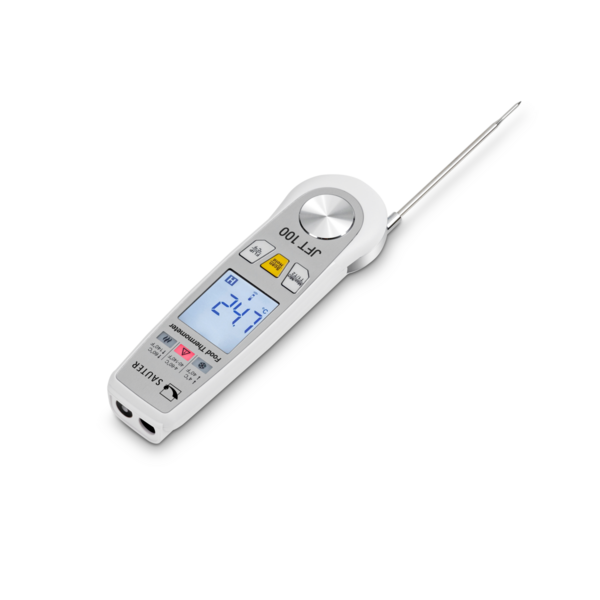

Description
Kern JFT 100 Industrial Dual Infrared & Fold-Out Probe Food Thermometer
Product Overview
The Kern JFT 100 is a professional-grade, rugged dual-sensor digital thermometer engineered specifically for demanding environments in food processing factories, commercial kitchens, quality control labs, and cold chain logistics. Combining a non-contact infrared (IR) sensor for rapid surface scanning with a high-precision fold-out penetration probe for internal core temperature measurement, the JFT 100 delivers all-in-one versatility. Built with FDA-compliant materials and designed to support rigorous HACCP compliance, this instrument ensures absolute food safety, regulatory compliance, and maximum operational efficiency.
What is a digital thermometer used for in food manufacturing?
In food production and manufacturing, a digital thermometer is an essential quality assurance and safety tool used to measure both surface and internal temperatures of raw ingredients, cooked products, and stored goods. Devices like the Kern JFT 100 enable operators to instantly detect cold or hot spots via infrared scanning while validating core temperatures via penetration probes to prevent foodborne illness, ensure pasteurization standards, and maintain regulatory compliance.
What makes the Kern JFT 100 ideal for HACCP compliance?
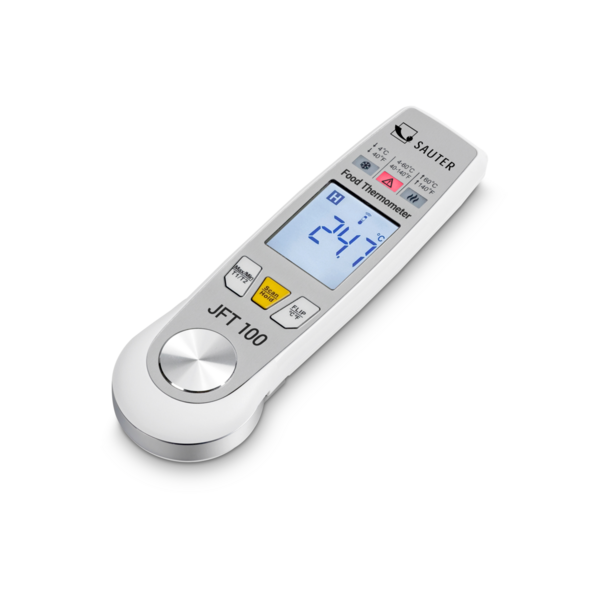
The Kern JFT 100 is engineered specifically to streamline Hazard Analysis Critical Control Point (HACCP) inspections. It features an intuitive temperature range display that gives clear indicators for critical limits, FDA-compliant food-contact materials, and a dual-measurement mode. By capturing both rapid surface temperatures and accurate internal core readings (-40 °C to 300 °C range), quality control teams can effortlessly document safe thermal thresholds throughout production, processing, and storage.
How do dual infrared and fold-out probe thermometers work?
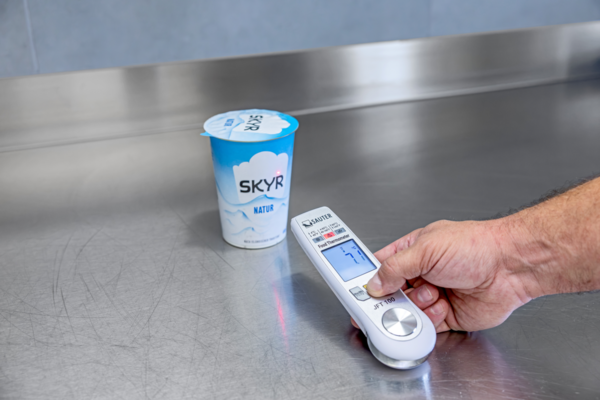
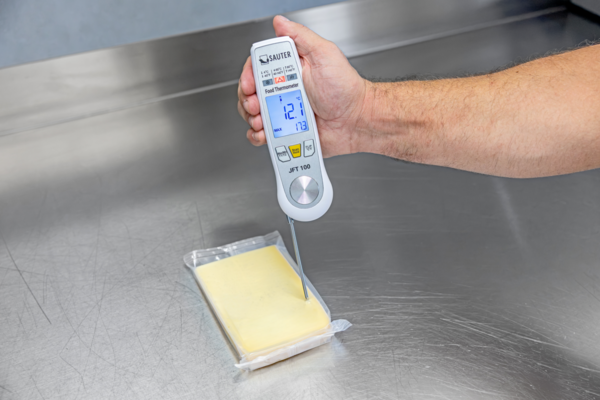
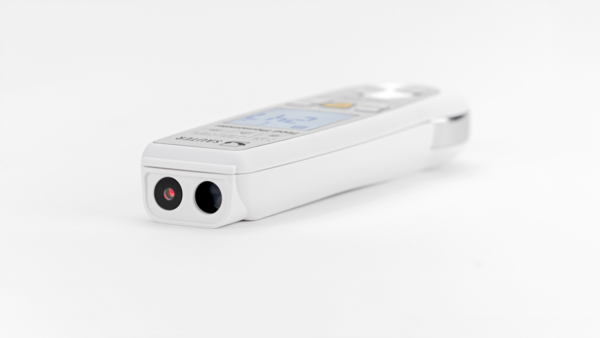
Dual thermometers combine non-contact infrared pyrometry with a direct-contact thermistor or K-sensor probe. The infrared sensor uses an optical lens (8:1 D:S ratio) and a single targeting laser to measure ambient or surface thermal radiation instantly. For deep internal readings, the mechanical fold-out probe is inserted into the product (with a minimum measuring depth of 12.5 mm), offering high-precision core temperature readings down to a readability of 0.1 °C.
Key Features & Technical Specifications of the JFT 100
- 2-in-1 Measurement Technology: Combines an 8:1 optical infrared sensor for fast surface checks with a fold-out K-sensor probe for internal core measurements.
- Wide Temperature Range:
- Infrared mode: -40 °C to 300 °C
- K-sensor probe mode: -50 °C to 300 °C
- HACCP & FDA Compliant: Built using FDA-compliant materials with dedicated temperature range displays to support HACCP guidelines.
- T1-T2 Temperature Difference: Supports comparative measurements between two measuring points for enhanced diagnostic and analytical accuracy.
- Ergonomic & Flexible Design: Features a 180° rotatable screen for easy viewing from any angle, plus a single laser for precise IR target marking.
- Industrial Durability: IP65-rated protection against dust and water splashes (EN 60529) and fall-proof construction up to 1 meter.
- Compact & Lightweight: Dimensions of 55 × 28 × 178 mm with a net weight of just 0.18 kg.
Primary Applications Of Industrial Digital Thermometers.
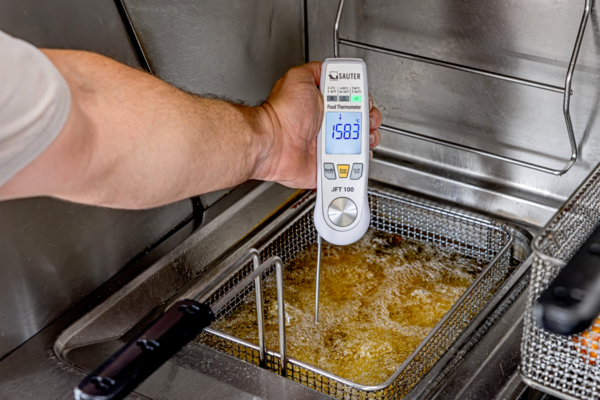
- Food Processing & Factory Quality Control: Monitoring cooking, cooling, pasteurization, and thermal processing cycles on active production lines.
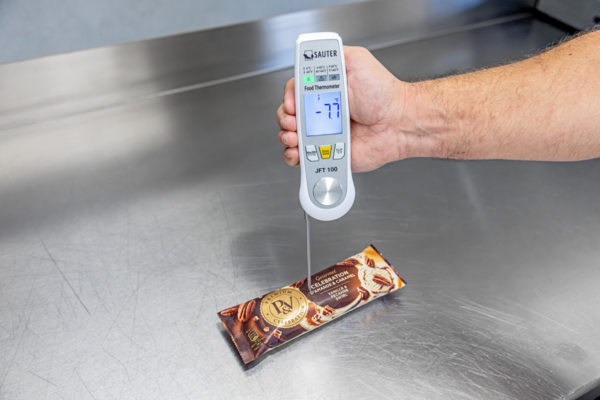
- Storage & Cold Chain Transport: Verifying incoming raw food shipments, cold storage warehouses, and refrigerated transport vehicles.
- Gastronomy & Commercial Kitchens: Ensuring bulk food preparation and storage meet stringent hygiene and safety standards.
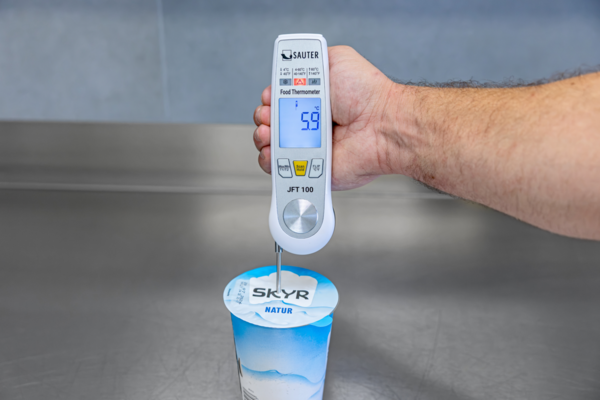
- Retail & Supermarkets: Routine spot-checking of refrigerated display cases, deli counters, and chilled shelving units.
Frequently Asked Questions (FAQs) Of Industrial Digital Thermometers.
What is an industrial digital thermometer used for in food production?
Industrial digital thermometers are utilized across food factories to measure temperatures during processing, cooking, freezing, and storage. They help verify that foods meet strict safety thresholds, prevent bacterial growth, and ensure compliance with food safety regulations.
How do you use a dual-sensor digital thermometer for food safety?
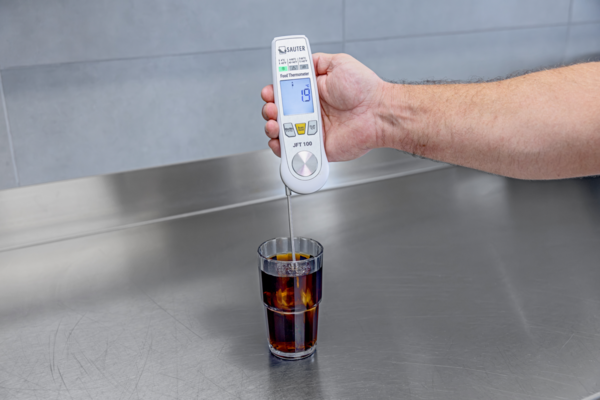
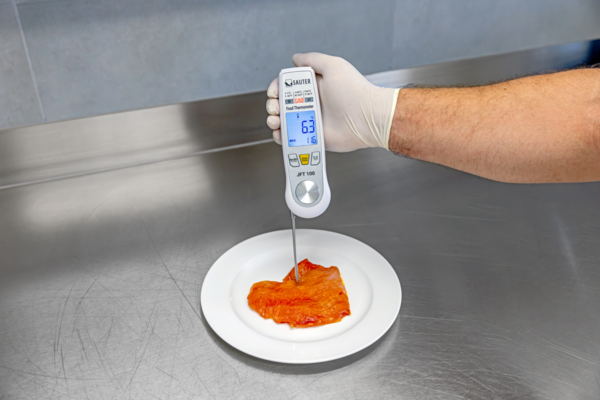
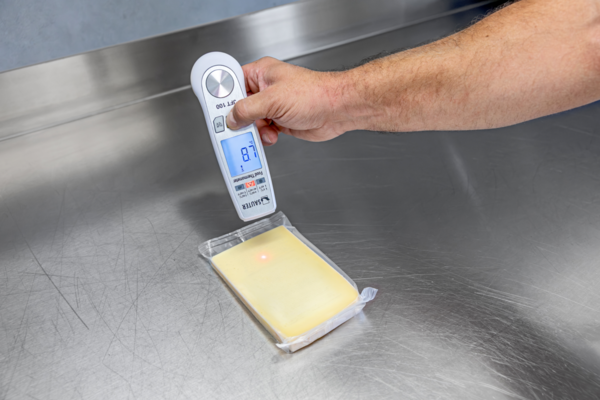
To use the Kern JFT 100, first utilize the infrared mode with the single laser to quickly scan surface temperatures or stacked packaging from a distance. For core verification (such as meat, sauces, or liquids), unfold the stainless steel probe and insert it into the product to at least the minimum measuring depth (12.5 mm) to obtain an accurate internal reading.
Where are industrial digital thermometers used in the food supply chain?
They are deployed across the entire farm-to-fork continuum, including processing plants, packaging facilities, commercial kitchens, wholesale distribution hubs, cold storage warehouses, and retail food displays.
Can an industrial digital thermometer give an inaccurate reading, and how do you prevent it?
Yes, inaccurate readings can occur if the infrared lens is obscured by steam or frost, if the probe is not inserted to the proper depth, or if the device falls out of calibration. Using a robust instrument like the JFT 100 with a high readability of 0.1 °C, ensuring proper probe immersion depth (min. 12.5 mm), and scheduling regular calibration checks prevents errors.
Why are dual infrared and probe digital thermometers best for food plants?
Dual thermometers eliminate the need for carrying multiple instruments. Operators can instantly screen large batches or hard-to-reach surfaces using the infrared function and immediately cross-verify core temperatures with the fold-out probe, maximizing both speed and measurement accuracy on busy factory floors.



Reviews
There are no reviews yet.