
 Feefo 5.0* 1000+ reviews
 UK wide delivery on all products
 Products can be fully calibrated & certified
 Service & repairs at competitive prices
 Find a better price and we will try and beat it
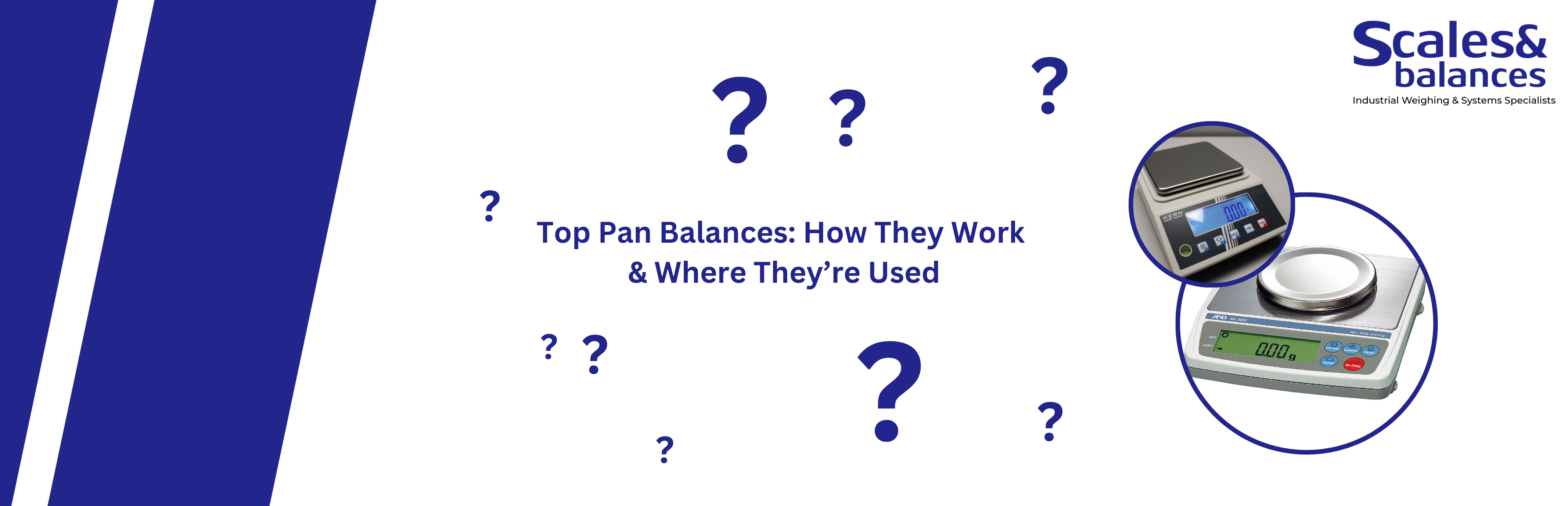
Top Pan Balances: How They Work & Where They’re Used
Top Pan balances are a common sight in a wide range of workplaces, supporting an incredibly broad range of precision weighing tasks. From science and education to industry and manufacturing, top pan balances feature a flat weighing pan for placing samples on and digital readouts for efficient weight measurement.
Our introductory guide to top pan balances has been written for anyone considering buying a top pan balance model. It will help explain what they do, where they’re used and describe features to look out for.
- What Is A Top Pan Balance?
- Where are Top Pan Balances Used?
- Top Pan Balance Features To Look Out For
- Tips For Using & Maintaining Top Pan Balances
- Purchasing A Top Pan Balance
What Is A Top Pan Balance?
A top pan balance is a digital weighing instrument designed for accurate and repeatable measurements in laboratory, educational and industrial environments. The term “top pan” refers to the open, flat weighing platform positioned on the top of the balance, allowing users to place containers, samples or materials directly onto the surface for measurement.
Unlike analytical balances, which often include enclosed draft shields for ultra-sensitive work, top pan balances provide a practical balance between precision and usability. Readability depends on the model, but they are typically suitable for everyday research and testing weighing tasks.
Most modern top pan balances use advanced load cell or electromagnetic weighing technology to deliver stable digital readings. Their design prioritises ease of use, with clear displays, intuitive controls and quick stabilisation times that help users work efficiently without sacrificing measurement quality.
Because they are versatile and easy to operate, top pan balances are widely used by students, laboratory technicians, quality control teams and production staff alike.
Where Are Top Pan Balances Used?
Top pan balances are used in almost every working environment that needs accurate weight data, especially of small items and samples. For example, they are often found in university laboratories, helping students conduct experiments safely. Their simple operation makes them ideal for teaching where accuracy is important, but equipment must remain accessible and straightforward to use.
In scientific laboratories, top pan balances are commonly used for sample preparation, formulation work and general weighing tasks. Researchers rely on them for everyday laboratory tasks. Their ability to deliver consistent results makes them a dependable tool.
Industrial laboratories and manufacturing environments also benefit from top pan balances. Quality control teams use them to verify product weights, check raw materials and support testing procedures. In food production or pharmaceutical settings, top pan balances may assist with portion control, batch preparation or ingredient measurement.
Outside traditional laboratory spaces, top pan balances are used in jewellery workshops, agriculture, environmental testing and light manufacturing facilities. Their adaptability allows them to support many applications that require reliable, mid-range precision.
Top Pan Balance Features To Look Out For
When selecting a top pan balance, understanding key features can help ensure you choose a model suited to your needs. Capacity and readability should be among the first considerations. Stability and response time are also important. High-quality top pan balances stabilise quickly, allowing users to complete weighing tasks efficiently. Built-in levelling systems and anti-vibration designs help maintain consistent readings, especially in busy environments where movement or airflow may be present.
Calibration features can make a significant difference to long-term performance. Many models include internal calibration functions that automatically adjust the balance to maintain accuracy. External calibration options using certified weights may also be available for organisations that require detailed quality control procedures.
User-friendly interfaces, bright displays, digital connectivity, and programmable weighing modes further enhance usability.
Tips For Using & Maintaining Top Pan Balances
Following manufacturer guidance in regard to proper use and maintenance plays a crucial role in achieving accurate results from top pan balances. Positioning the balance on a stable, level surface is essential, as is avoiding environmental interference from air movement and temperature.
Regular cleaning helps protect sensitive components and ensures reliable performance. Wipe down the weighing pan after use and remove any residue that may build up over time. Using appropriate containers or weighing boats can also prevent spills and minimise contamination.
Calibration should be carried out regularly according to manufacturer guidelines. Establishing a routine schedule helps maintain accuracy and ensures the balance continues to perform as expected. In environments where precision is critical, keeping a record of calibration and maintenance activities can support compliance and quality assurance processes.
Training staff on correct weighing techniques is another important step. Even a well-designed top pan balance can produce inconsistent results if used poorly.
Purchasing A Top Pan Balance
Purchasing a top pan balance begins with understanding how it will be used within your organisation. Consider factors such as sample size, required precision and your working environment. A model designed for use in a classroom is likely to differ from one intended for use in industrial quality control, for example.
A specialist supplier can help you navigate technical specifications and select a balance that meets your needs. A well-built top pan balance can provide years of dependable service, reducing downtime and supporting consistent measurement practices.
Ultimately, top pan balances remain one of the most practical and widely used forms of laboratory weighing equipment. Their combination of accuracy, ease of use and versatility makes them an essential tool across education, research and industry. By selecting the right features and maintaining the balance properly, organisations can ensure reliable weighing performance and greater confidence in their results.